L'dor
A modern cultural heritage brand built for the next generation.
The problem
I'm that 28-year-old — moving into my first real apartment, wanting to host Shabbat, and realizing that modern cultural heritage pieces basically don't exist. Everything available was either synagogue gift shop or family heirloom: dated, overpriced for institutions, or designed for someone else entirely.
My hypothesis
I surveyed over 100 young Jewish adults before building anything. Same answer every time: feel like CB2, not a synagogue gift shop — and priced for someone buying it themselves at 27, not receiving it as a wedding gift.
What I built
A brand and a six-product collection — everything on a Shabbat table — with pricing anchored at $22 (something you'd buy yourself) and $88 (something you'd give as a gift). The marketing site came first, deliberately: if the aesthetic didn't resonate, the infrastructure wouldn't have mattered.
What broke
The site looks like a real store — the buttons don't go anywhere. I proved aesthetic fit; purchase intent is still an open question. The harder constraint: deciding on the palette, product lineup, and brand voice required actual judgment the model couldn't supply.
What I learned
Sequencing brand before infrastructure was right: if the aesthetic doesn't work, the checkout button doesn't matter. But the harder constraint in brand work isn't what the model can produce — it's what you can decide.
If I kept going
The brand is validated. The business model isn't. A waitlist with a $10 deposit would tell me more than any survey — if 50 people put down money before the product ships, the business case is real.
Prototype
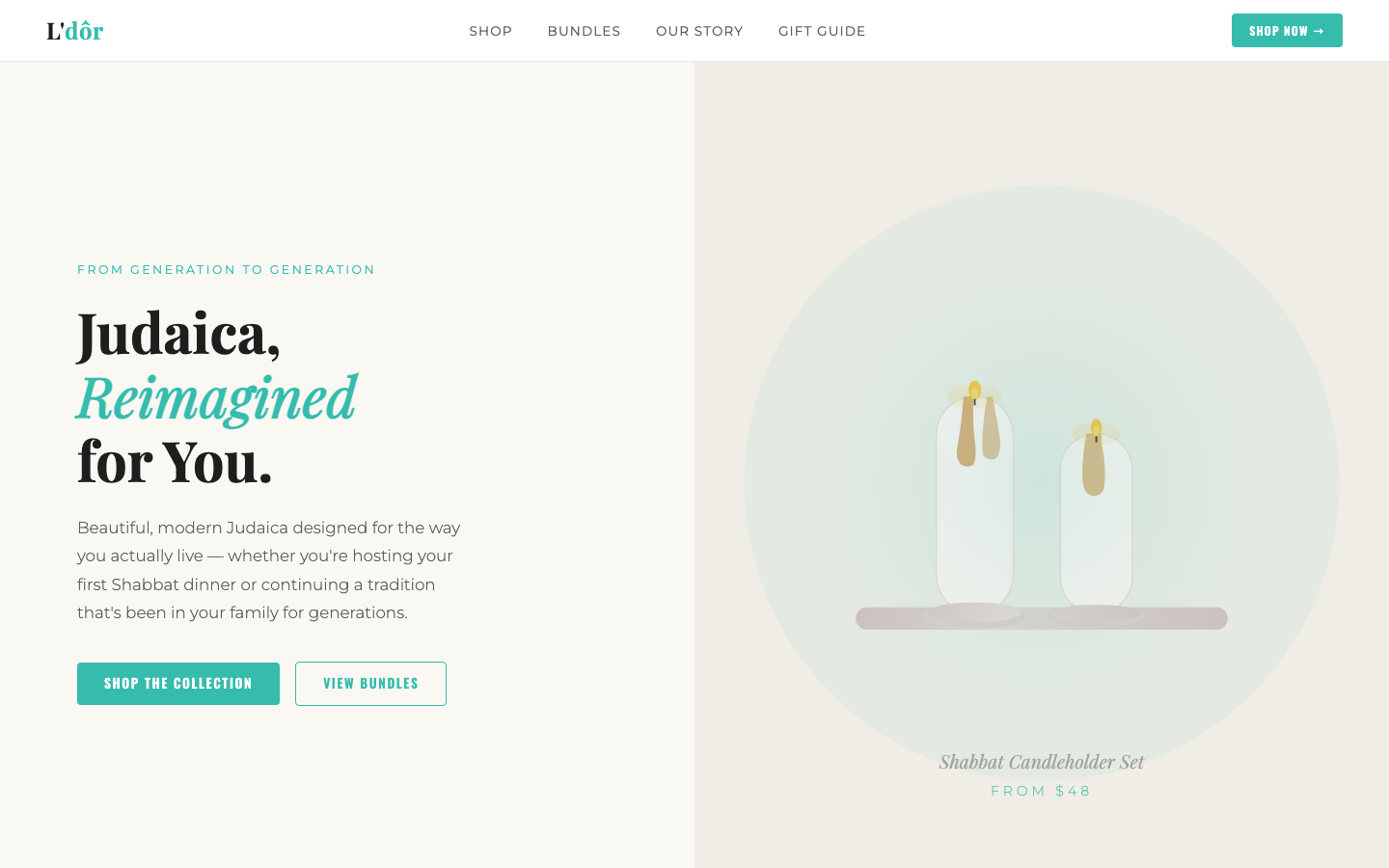
Landing: cultural heritage, reimagined for you — pricing anchored at $22 and $88
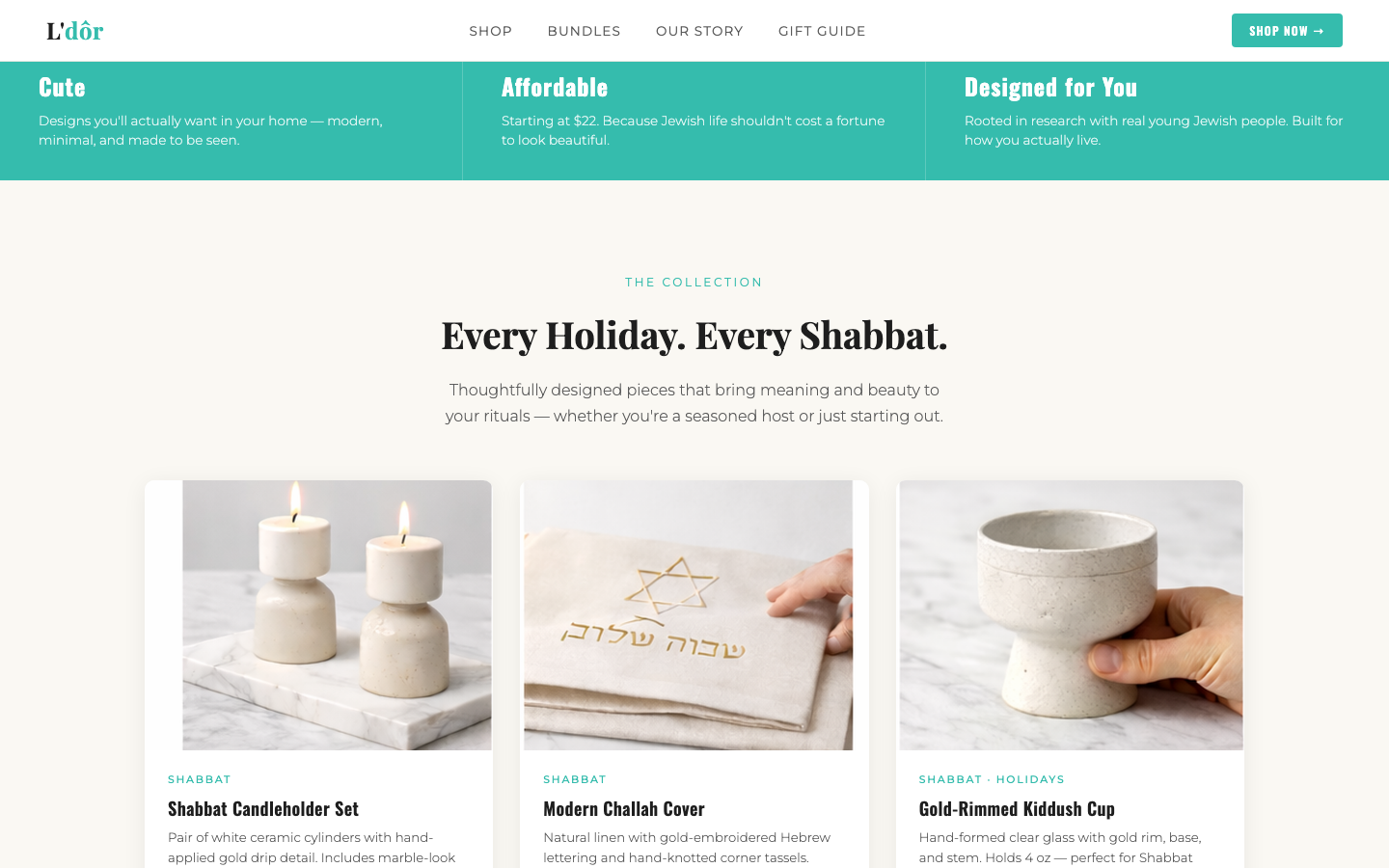
The collection: six pieces for the Shabbat table — Every Holiday. Every Shabbat.
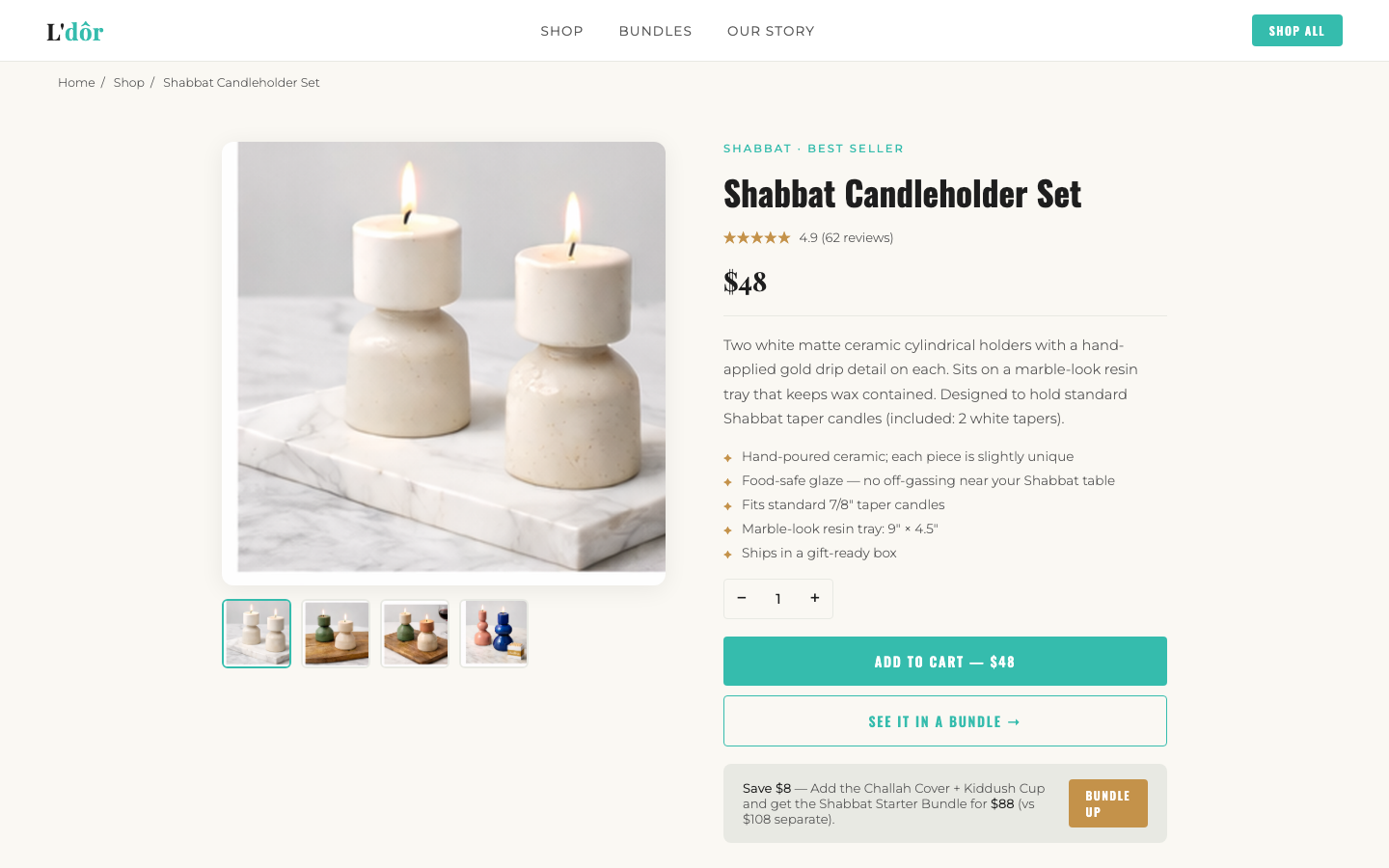
Shabbat Candleholder Set PDP — $48 anchor product, warm editorial photography
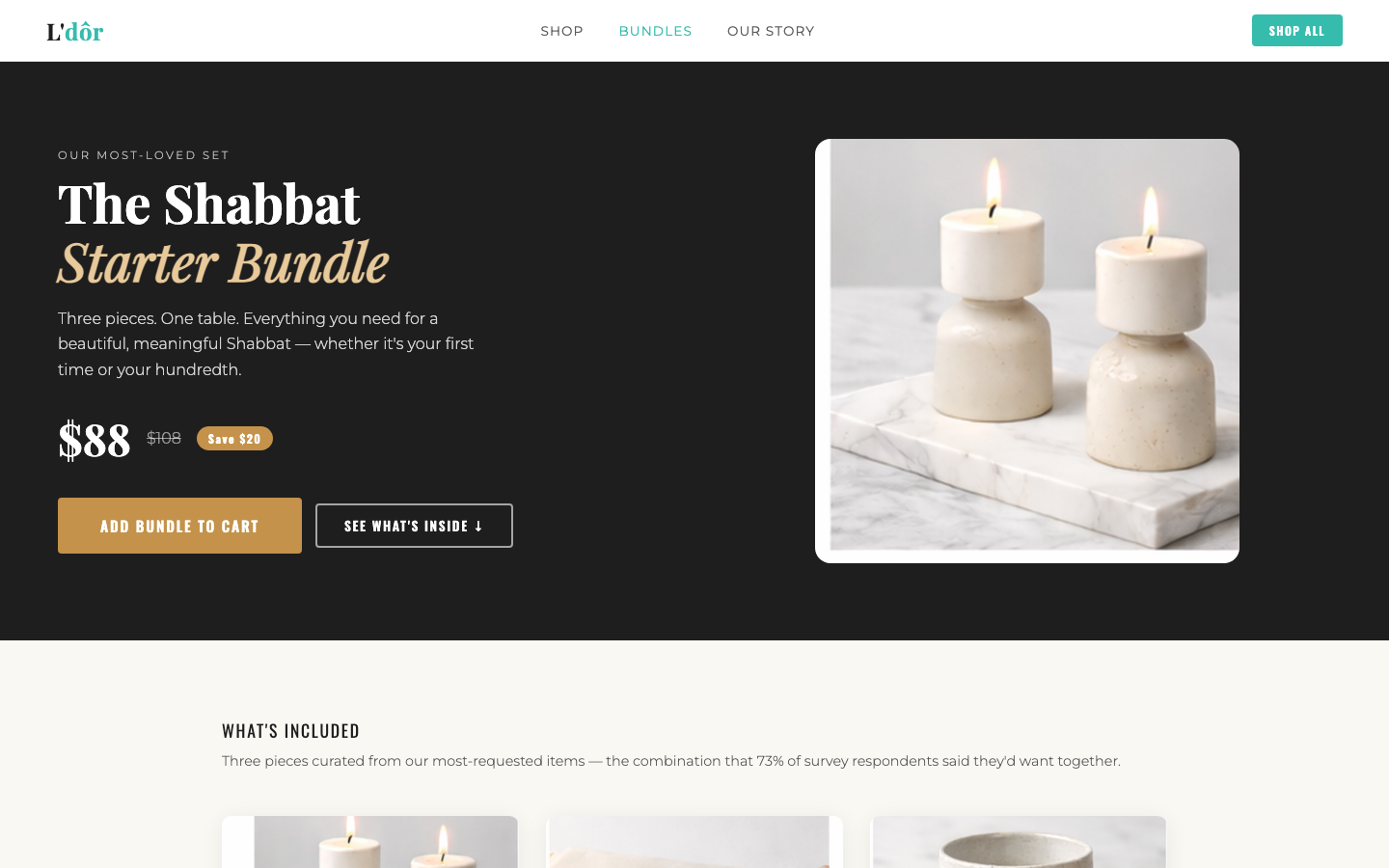
Starter Bundle: $88 gift-mode entry with three of the most-requested pieces